

Does Beard Oil Actually Work? Everything You Need to Know Before You Buy in 2026
TLDR: Beard oil is a conditioning product that moisturizes your beard hair and the skin underneath it.
It does not directly cause beard growth, but it creates the conditions for healthier, fuller-looking growth over time.
The best beard oil for you depends on your beard type, skin, and what you want it to smell like. Keep reading for the full breakdown, including how to use it, when to use it, what ingredients to look for, and how it compares to beard balm, beard butter, and beard conditioner.
What Is Beard Oil?
Beard oil is a blend of carrier oils, and sometimes essential oils or fragrance, designed to condition beard hair and moisturize the skin underneath it. That is really it. It is not a serum, not a styling product, and not a growth treatment. It is a conditioning oil that does for your beard what lotion does for your skin.
Most men start using beard oil because their beard is itchy, dry, or rough to the touch. Those are all signs that the skin beneath your beard is not getting enough moisture, and that your beard hair itself is drying out. Beard oil fixes both problems at the same time.
What is beard oil for, specifically?
- Reducing beard itch, especially in the early growth stages
- Softening coarse or wiry beard hair
- Moisturizing the skin under the beard to prevent flaking (beardruff)
- Adding a light scent to your grooming routine
- Making the beard easier to shape and manage
- Supporting overall beard and skin health
Beard Oil Benefits Worth Knowing
Here are the main beard oil benefits that actually hold up in real use:
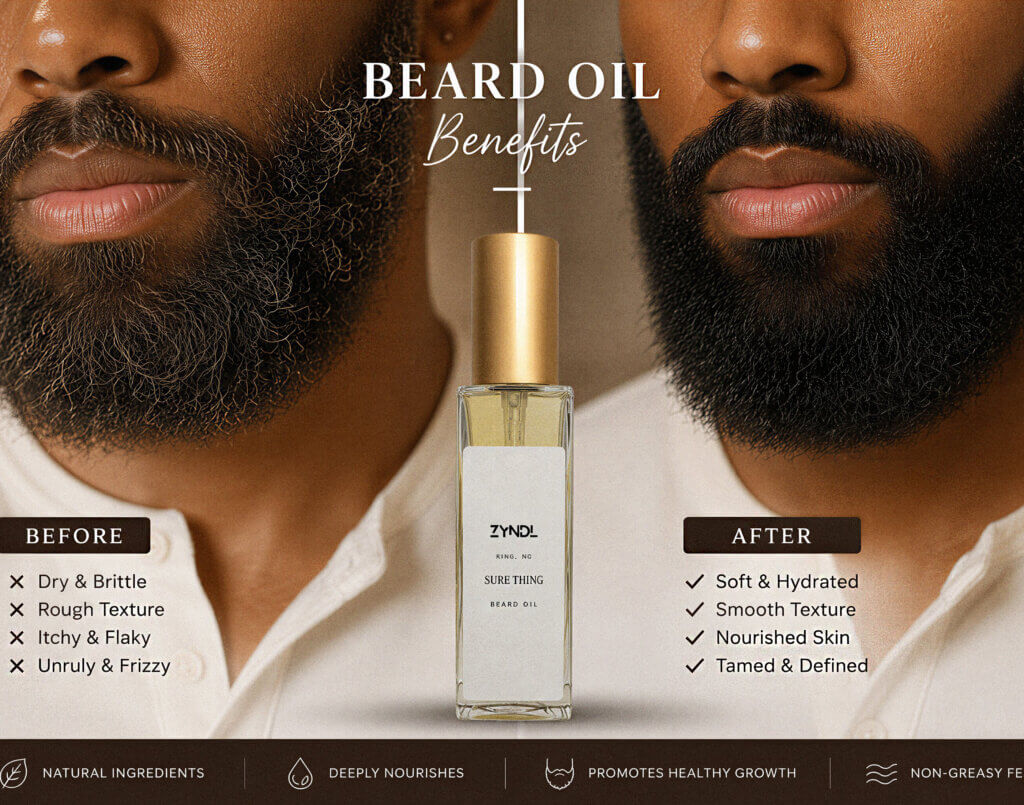
1. It stops the itch. The itch you feel when growing a beard is mostly caused by dry skin and dry hair ends scraping the skin. Beard oil addresses both. Most men notice a difference within the first week of daily use.
2. It softens the beard. Carrier oils penetrate the hair shaft and add moisture from the inside out. A softer beard is easier to comb, easier to style, and more comfortable for anyone who gets close to it.
3. It moisturizes the skin underneath. The skin under a beard is often ignored and under-moisturized because it is hard to reach. Beard oil absorbs into the skin directly, reducing dryness, redness, and flaking.
4. It supports a healthier beard environment. Healthy skin grows healthier hair. Keeping the follicle environment moisturized and free of buildup gives your beard the best conditions to grow as full and thick as your genetics allow.
5. It adds a scent without overpowering. A good beard oil fragrance sits close to the skin. It is noticeable up close but not a room-announcing cologne. This makes it one of the most subtle and consistent ways to keep a signature scent going throughout the day.
Beard Oil Benefits Worth Knowing
Here are the main beard oil benefits that actually hold up in real use:
1. It stops the itch. The itch you feel when growing a beard is mostly caused by dry skin and dry hair ends scraping the skin. Beard oil addresses both. Most men notice a difference within the first week of daily use.
2. It softens the beard. Carrier oils penetrate the hair shaft and add moisture from the inside out. A softer beard is easier to comb, easier to style, and more comfortable for anyone who gets close to it.
3. It moisturizes the skin underneath. The skin under a beard is often ignored and under-moisturized because it is hard to reach. Beard oil absorbs into the skin directly, reducing dryness, redness, and flaking.
4. It supports a healthier beard environment. Healthy skin grows healthier hair. Keeping the follicle environment moisturized and free of buildup gives your beard the best conditions to grow as full and thick as your genetics allow.
5. It adds a scent without overpowering. A good beard oil fragrance sits close to the skin. It is noticeable up close but not a room-announcing cologne. This makes it one of the most subtle and consistent ways to keep a signature scent going throughout the day.
Does Beard Oil Help Your Beard Grow?
This is the question everyone asks, and the honest answer is: not directly.
Beard oil does not stimulate new follicles or override your genetics. Your beard growth rate and terminal length are largely determined by hormones, specifically DHT (dihydrotestosterone), and your genetics. No topical oil changes that.
What beard oil does do is create better conditions for the beard you already have to grow and stay healthy. A moisturized scalp and skin reduces breakage. Less breakage means your beard reaches its full length instead of snapping off before it gets there. Over time, a well-conditioned beard looks thicker and fuller, even if the actual growth rate has not changed.
So does beard oil help growth? It helps your beard reach its potential. That is a meaningful difference, even if it is not the miracle marketing some brands suggest.
Does Beard Oil Work? What the Evidence Says
Beard oil works well for what it is designed to do: conditioning and moisturizing. The evidence for that is solid. The evidence for growth stimulation is more complicated and depends heavily on which ingredients are in the oil.
Some ingredients like castor oil and peppermint essential oil have been studied for hair growth applications, though most of that research is on scalp hair, not beards. The mechanisms are similar enough to be worth noting.
A 2016 study published in Toxicological Research found that peppermint oil applied topically promoted hair growth in mice more effectively than minoxidil in the study period. That is promising, but it is mouse data, and scalp data at that. It is not a beard growth claim you should take to the bank.
What you can count on: beard oil works to condition, moisturize, reduce itch, and improve the overall health of both your beard and the skin underneath. For most men, that is exactly what they needed in the first place.
Best Oil for Beard Growth: What Ingredients Actually Matter
Castor Oil for Beard Growth
Castor oil is one of the most talked-about ingredients in the beard growth conversation. It is thick and rich in ricinoleic acid, a fatty acid that may improve circulation in the scalp and skin. Better circulation means better nutrient delivery to hair follicles.
The honest reality: castor oil for beard growth has a strong anecdotal following and a thin clinical record. Most men who use it report that their beard feels thicker and looks fuller. Whether that is actual growth or just better-conditioned hair is hard to separate. Castor oil is also heavy, so it works best when blended with lighter oils rather than used alone.
Coconut Oil for Beard
Coconut oil is one of the few oils with published research showing it can actually penetrate the hair shaft rather than just coating it. A study in the Journal of Cosmetic Science found that coconut oil reduced protein loss in hair better than mineral oil or sunflower oil did.
Is coconut oil good for your beard? Yes, with some caveats. Fractionated coconut oil (MCT) is lighter than whole coconut oil and absorbs more easily without leaving a greasy residue. Whole unrefined coconut oil can clog pores if overused, especially for men with oily or acne-prone skin.
Hemp Seed Oil
Cold pressed virgin hemp seed oil is rich in omega-3 and omega-6 fatty acids in close to a 3:1 ratio, which mirrors what skin naturally produces. It absorbs well, reduces inflammation on the skin underneath the beard, and adds meaningful moisture without heaviness.
Macadamia Nut Oil
Virgin macadamia nut oil has one of the highest oleic acid contents of any carrier oil, around 60 percent. Oleic acid is the primary fatty acid in human sebum, which is why macadamia absorbs so quickly and naturally into both skin and hair. It is one of the best conditioning oils available for coarse or dry beard types.
Monoi Oil
Monoi oil is a traditional Polynesian oil made by infusing gardenia flowers in refined coconut oil. It adds moisture, a light tropical warmth, and a softness to the beard that plain coconut oil does not quite match.
Jojoba Oil
Jojoba is technically a liquid wax, not an oil, and it is the closest natural substance to human sebum. It regulates the skin’s oil production, absorbs without clogging pores, and is one of the most commonly used base oils in beard oil products.
Argan Oil
Argan oil is high in vitamin E and linoleic acid and adds a smooth, shiny finish to beard hair. It is often used in beard oil blends for men with longer or coarser beards that tend toward dryness.
Beard Oil Ingredients: What to Look For and What to Avoid
Look for:
- Cold pressed or virgin carrier oils (higher nutrient retention)
- Oils without added mineral oil or silicone fillers
- Fragrance listed as a single ingredient (this is standard INCI labeling)
- Simple, short ingredient lists
Be cautious with:
- Mineral oil (coats the hair without conditioning it)
- Synthetic fragrance stacked with multiple chemical identifiers
- Alcohol high on the ingredient list (drying)
- Very cheap oils listed first (usually a sign of filler-heavy formulas)
Beard Balm vs Beard Oil vs Beard Butter vs Beard Conditioner
This comes up constantly, and the differences matter once you know what you are trying to do.
| Product | Hold | Moisture | Best For | When to Use |
|---|---|---|---|---|
| Beard Oil | None | High | All beard lengths, dry skin, daily use | After washing, on damp beard |
| Beard Balm | Light | Medium | Medium to long beards needing shape | After oil, on dry beard |
| Beard Butter | Very light | High | Coarse, thick, or curly beards | After washing, as a leave-in |
| Beard Conditioner | None | High | Wash-day softening treatment | In the shower, rinse out |
Beard balm vs beard oil: Beard oil is pure conditioning. Beard balm adds beeswax or shea butter to give light hold and shape. If you have a shorter beard or you just want conditioning without styling, beard oil is the better pick. If you have a longer beard that needs to stay in place, balm works on top of oil.
Beard butter vs oil: Beard butter is thicker than oil and typically contains shea or mango butter. It is especially popular as a beard oil for Black men because it works well on coarse and tightly coiled hair textures that need more moisture and slip than a standard oil provides.
Beard conditioner vs oil: Beard conditioner is a rinse-out product you use in the shower. Beard oil is a leave-in you apply after washing. They are not the same thing and work best used together, not as substitutes.
When to Use Beard Oil and How Often
When to use beard oil: The best time to apply beard oil is right after washing your face or showering, when your skin and beard are still slightly warm and your pores are open. The oil absorbs much more effectively at this point than it does on a cold, dry beard.
How often to use beard oil: For most men, once daily is the right frequency. Men with very dry skin or a longer, coarser beard may benefit from a small second application in the evening. Men with oily skin may find every other day is enough. Start daily and adjust based on how your beard and skin respond.
Morning or night? Morning is the standard recommendation because it sets your beard up for the day and lets the fragrance work while you are out. A small evening application on very dry beards helps overnight moisture retention.
How to Apply Beard Oil Correctly
Getting the application right matters more than most men realize.
- Start with a clean, slightly damp beard. Wash your face or step out of the shower first.
- Dispense 3 to 5 drops into your palm. Use more for a longer beard, less for a shorter one.
- Rub both palms together to warm the oil and distribute it evenly across your hands.
- Work the oil into your beard starting at the skin level. Press your fingers through to the skin beneath the beard first, then work outward to the ends.
- Use a beard comb or boar bristle brush to distribute the oil evenly and style as needed.
- Do not rinse it out. Beard oil is a leave-in product.
The most common mistake is applying too much. Three drops is usually enough for a short to medium beard. More is not better here.
Homemade Beard Oil: Can You Make Your Own?
Yes, and it is simpler than most people expect. If you want to make your own beard oil or mix a custom blend, the basic formula is:
- 1 oz total carrier oil blend
- 10 to 15 drops of essential oil for fragrance (optional)
- A 1 oz dropper bottle
A simple starting blend: 40% jojoba, 30% sweet almond oil, 20% argan, 10% castor oil. That gives you a balanced mix of fast-absorbing, conditioning, and heavy oils.
The main reason to buy rather than make your own is fragrance quality. Blending a good smelling beard oil at home takes trial and error.
Essential oils can be overpowering or fade quickly, and getting the scent balance right without experience is harder than it looks.
A well-made small-batch beard oil like Zyndl’s gives you the clean carrier oil base of a homemade product without the guesswork on fragrance.
Best Beard Oil Brands Worth Knowing
There are a lot of beard oil products on the market. Here are brands worth looking at across different price points and priorities.
Zyndl (King, NC) Small-batch beard oil manufacturer based in King, North Carolina. Zyndl’s beard oils are handmade with five clean carrier oils: virgin macadamia nut, cold pressed virgin hemp seed, monoi oil, fractionated coconut MCT, and sweet almond oil. No synthetic fillers. Fragrance is blended in-house. Current collection includes:
- Sure Thing — Plum, peach, leather, patchouli, vanilla. A warm, confident scent built for everyday wear.
- Cedar & Leather — Cedar and worn leather with a dry woody finish. Clean and grounded with no sweetness.
Both are 1 oz / 29 ml and available directly through Zyndl’s online store.
Honest Amish One of the most well-known American beard oil brands. Heavy on natural and organic ingredients. Their Classic Beard Oil uses argan, avocado, and pumpkin seed oils. A solid all-around performer with a long track record.
Grave Before Shave Strong fragrance focus with a wide scent range. Popular for their Bay Rum and Pine scents. Good entry-level pricing.
Viking Revolution Budget-friendly and widely available. Works fine as an introduction to beard oil. Less focused on premium ingredients than small-batch brands.
Beardbrand Well-known for their branding and scent development. Uses quality carrier oils and has a strong community behind it. Higher price point but consistently good product.
FAQ
Sources: Panahi Y et al., “Rosemary oil vs minoxidil 2% for the treatment of androgenetic alopecia,” Skinmed, 2015. Oh JY et al.,
“Peppermint Oil Promotes Hair Growth without Toxic Signs,” Toxicological Research, 2016. Rele AS, Mohile RB, “Effect of mineral oil, sunflower oil, and coconut oil on prevention of hair damage,” Journal of Cosmetic Science, 2003.
